Page | 020 Take-aways from Recent ESS Fires
Prevention Mitigation
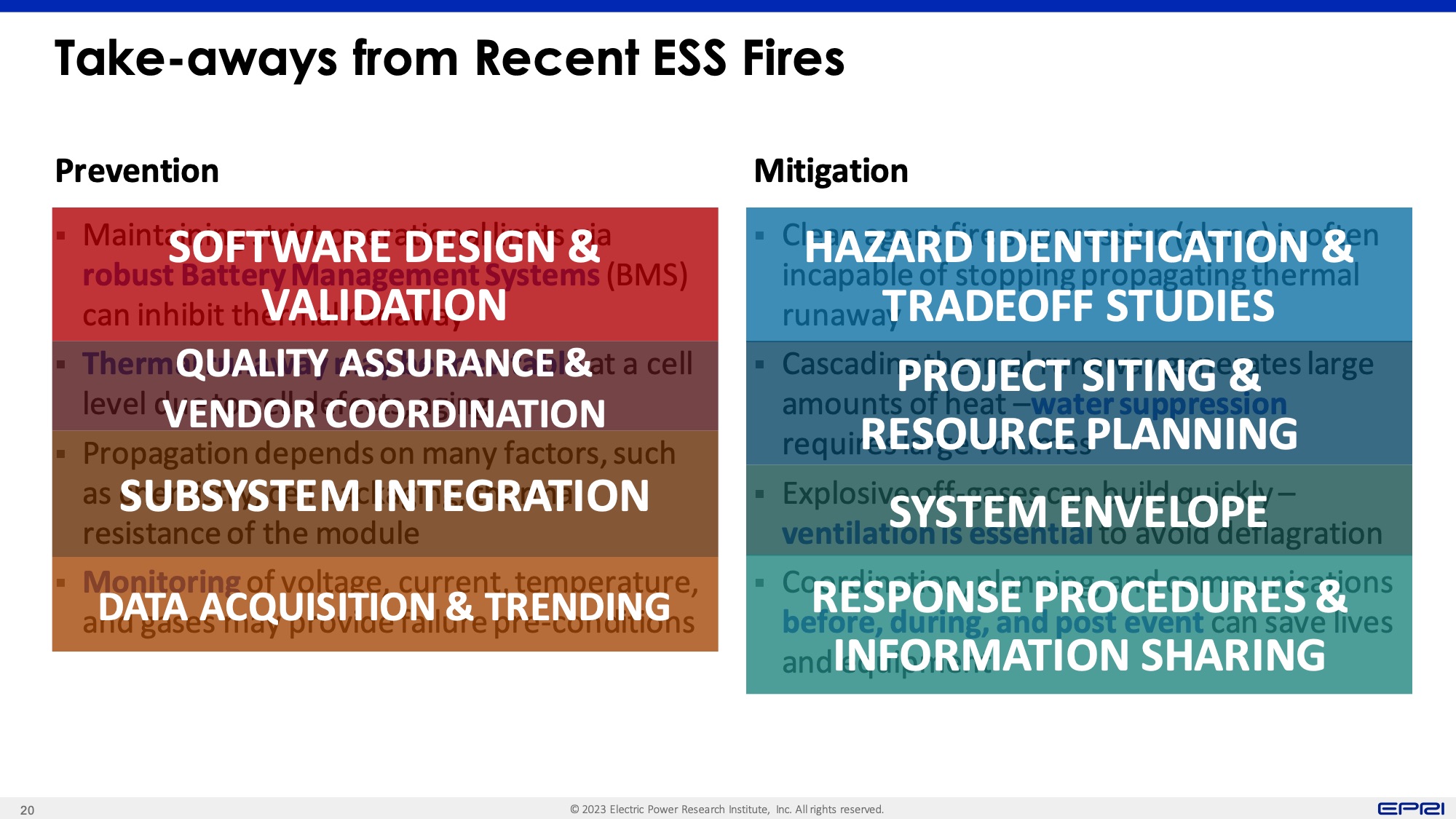
▪ Maintaining strict operational limits via SOFTWARE DESIGN &
robust Battery Management Systems (BMS)
VALIDATION
can inhibit thermal runaway
▪ Thermal runaway may be inevitable at a cell QUALITY ASSURANCE &
level due to cell defects, aging
VENDOR COORDINATION
▪ Propagation depends on many factors, such as chemistry, cell packaging, thermal
SUBSYSTEM INTEGRATION
resistance of the module
▪ Monitoring of voltage, current, temperature,
DATA ACQUISITION & TRENDING
and gases may provide failure pre-conditions
▪ Clean agent fire suppression (alone) is often HAZARD IDENTIFICATION &
incapable of stopping propagating thermal
runaway
TRADEOFF STUDIES
▪ Cascading thermal runaway generates large PROJECT SITING &
amounts of heat –water suppression
RESOURCE PLANNING
requires large volumes
▪ Explosive off-gases can build quickly –
SYSTEM ENVELOPE
ventilation is essential to avoid deflagration
▪ Coordination, planning, and communications RESPONSE PROCEDURES &
before, during, and post event can save lives
INFORMATION SHARING
and equipment
20 © 2023 Electric Power Research Institute, Inc. All rights reserved.
|
