Salgenx

EMERGENCY RESPONSE GUIDE Tesla Model X


Only You Can Prevent Lithium Energy Battery Fires
An alternative to Lithium Energy Storage Fires: The Salgenx Saltwater Battery: A revolutionary energy storage solution for grid-scale and sustainable power needs. No Lithium in the battery chemistry. With non-toxic, eco-friendly saltwater electrolytes, Salgenx offers high efficiency, durability, and safety for renewable energy integration. Ideal for large-scale storage, data centers, and off-grid systems.


Publication Title | EMERGENCY RESPONSE GUIDE Tesla Model X

Grid Scale Storage Publications Search

Search Lithium Fire Publications search was updated real-time via Filemaker on:

Search Lithium Fire Publications | Return to Search List

Search Completed | Title | EMERGENCY RESPONSE GUIDE Tesla Model X
Original File Name Searched: 2016_Model_X_Emergency_Response_Guide_en.pdf | Google It | Yahoo | Bing

Previous Page | Next Page
emergency-response-guide-tesla-model-x-011</TD> <TD valign=

Page | 011

Battery Low-Voltage
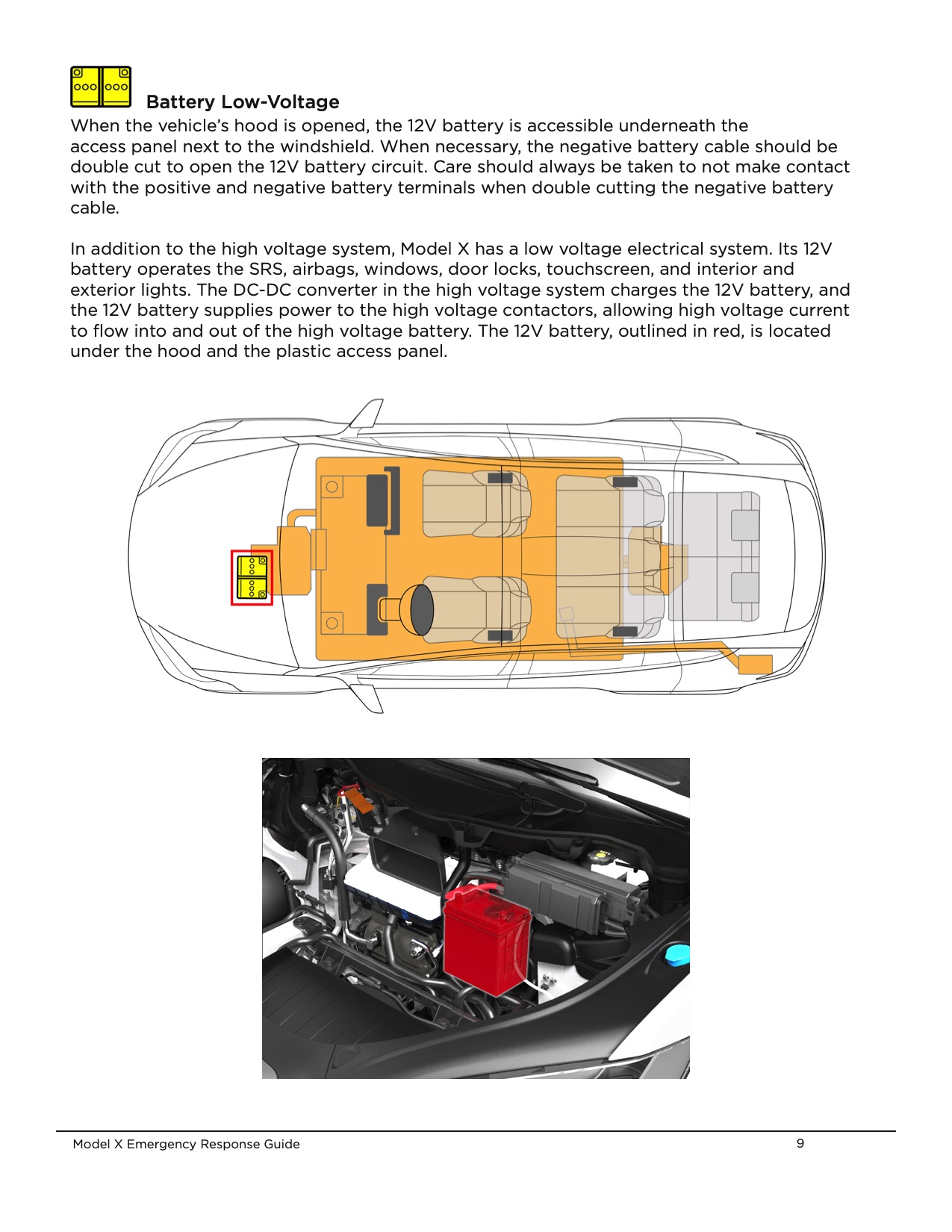
When the vehicle’s hood is opened, the 12V battery is accessible underneath the
access panel next to the windshield. When necessary, the negative battery cable should be double cut to open the 12V battery circuit. Care should always be taken to not make contact with the positive and negative battery terminals when double cutting the negative battery cable.
In addition to the high voltage system, Model X has a low voltage electrical system. Its 12V battery operates the SRS, airbags, windows, door locks, touchscreen, and interior and exterior lights. The DC-DC converter in the high voltage system charges the 12V battery, and the 12V battery supplies power to the high voltage contactors, allowing high voltage current to flow into and out of the high voltage battery. The 12V battery, outlined in red, is located under the hood and the plastic access panel.
Model X Emergency Response Guide 9

Search Contact: greg@salgenx.com